
Middle Years Programme Curriculum
What We Study
The Core of Learning: What we study
The International Baccalaureate® (IB) Middle Years Programme (MYP) curriculum comprises eight subject groups, providing a broad and balanced education for early adolescents.
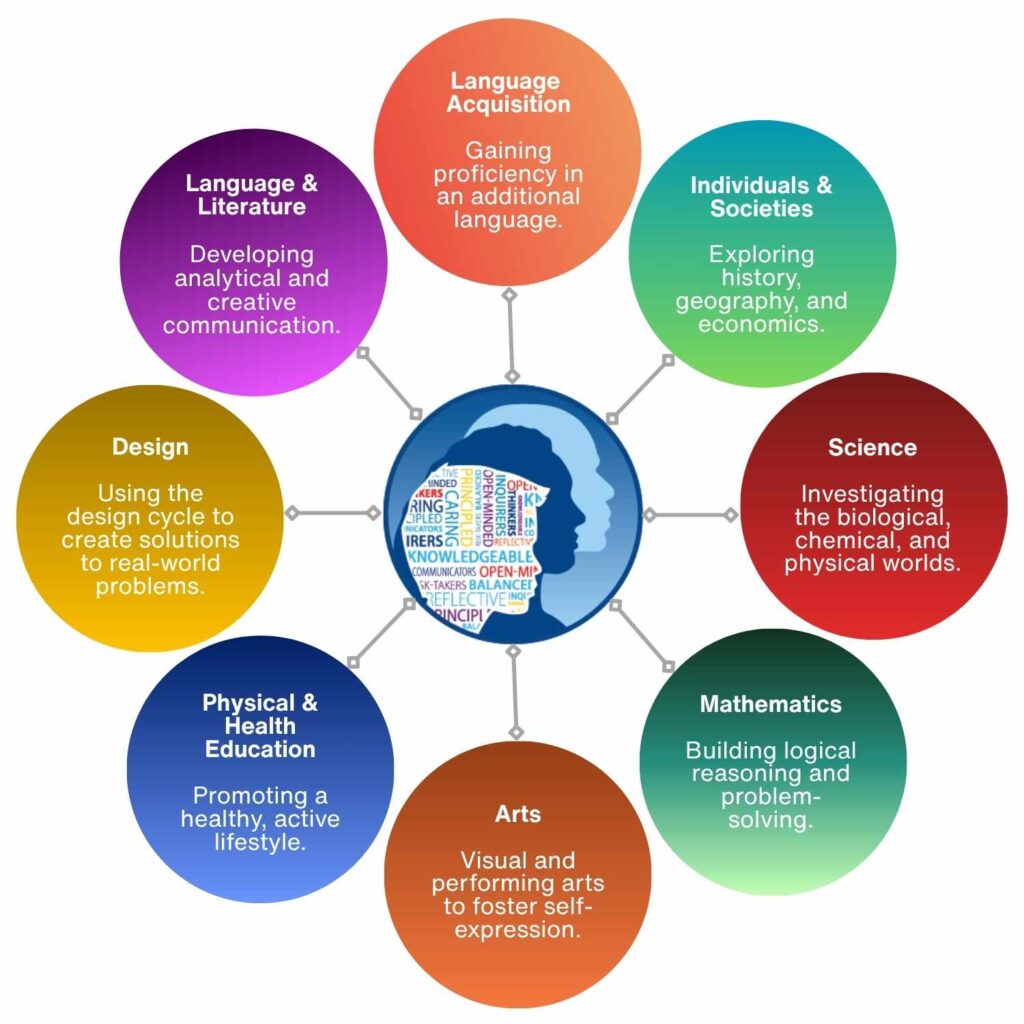
The International Baccalaureate® (IB) Middle Years Programme (MYP) curriculum comprises eight subject groups, providing a broad and balanced education for early adolescents.
Language Acquisition
Gaining proficiency in an additional language while developing intercultural understanding and communication skills.
Individuals & Societies
Exploring history, geography, economics, and human behavior to better understand the world and our place within it.
Science
Investigating the biological, chemical, and physical worlds through inquiry, experimentation, and critical thinking.
Mathematics
Building logical reasoning, analytical thinking, and problem-solving skills through mathematical concepts and applications.
Arts
Engaging in visual and performing arts to foster creativity, self-expression, and appreciation of diverse perspectives.
Physical & Health Education
Promoting a healthy, active lifestyle while developing teamwork, personal well-being, and lifelong fitness habits.
Design
Using the design cycle to create innovative solutions to real-world problems through creativity and practical application.
Language & Literature
Developing analytical, interpretive, and creative communication skills through the study of language and literature.
Approaches to Learning (ATL): What we can do
Thinking Skills
Research Skills
Communication Skills
Social Skills
Self-Management Skills
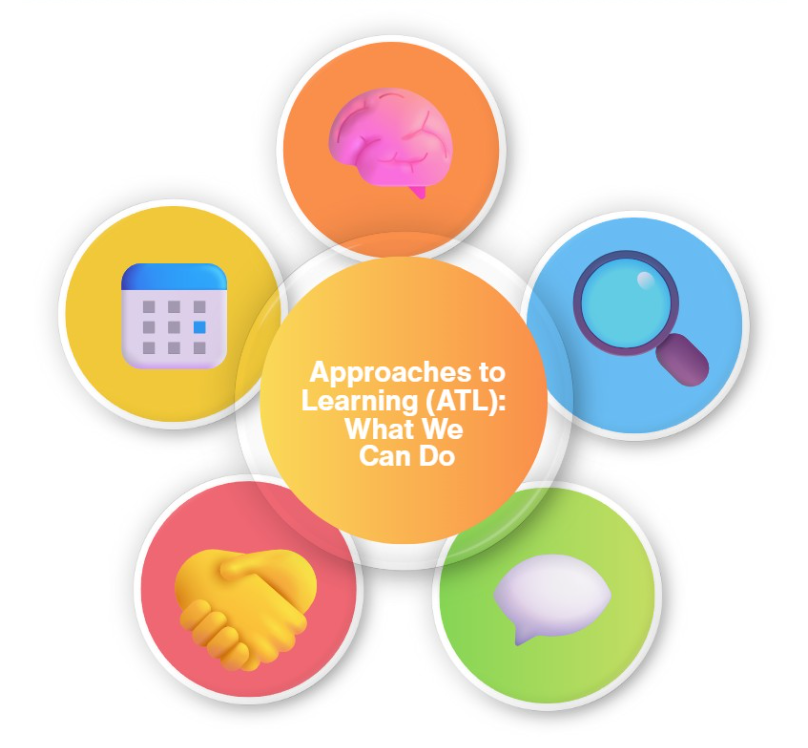
Thinking Skills
Students develop critical and creative thinking skills to analyze information, solve problems, make decisions, and generate new ideas. These skills support inquiry and lifelong learning.
Research Skills
Learners gather, organize, interpret, and evaluate information from a variety of sources. They learn how to ask meaningful questions and conduct effective investigations.
Communication Skills
Students express ideas confidently through speaking, listening, reading, writing, and presenting. They also learn to communicate effectively in different contexts and with diverse audiences.
Social Skills
Learners build positive relationships through collaboration, cooperation, empathy, and respect. These skills help them work successfully with others and contribute to their communities.
Self-Management Skills
Students learn to manage their time, emotions, behavior, and responsibilities effectively. These skills foster independence, resilience, organization, and personal well-being.