
Primary Years Programme Curriculum
What We Study – Exploring Knowledge Across
Disciplines in the PYP Framework
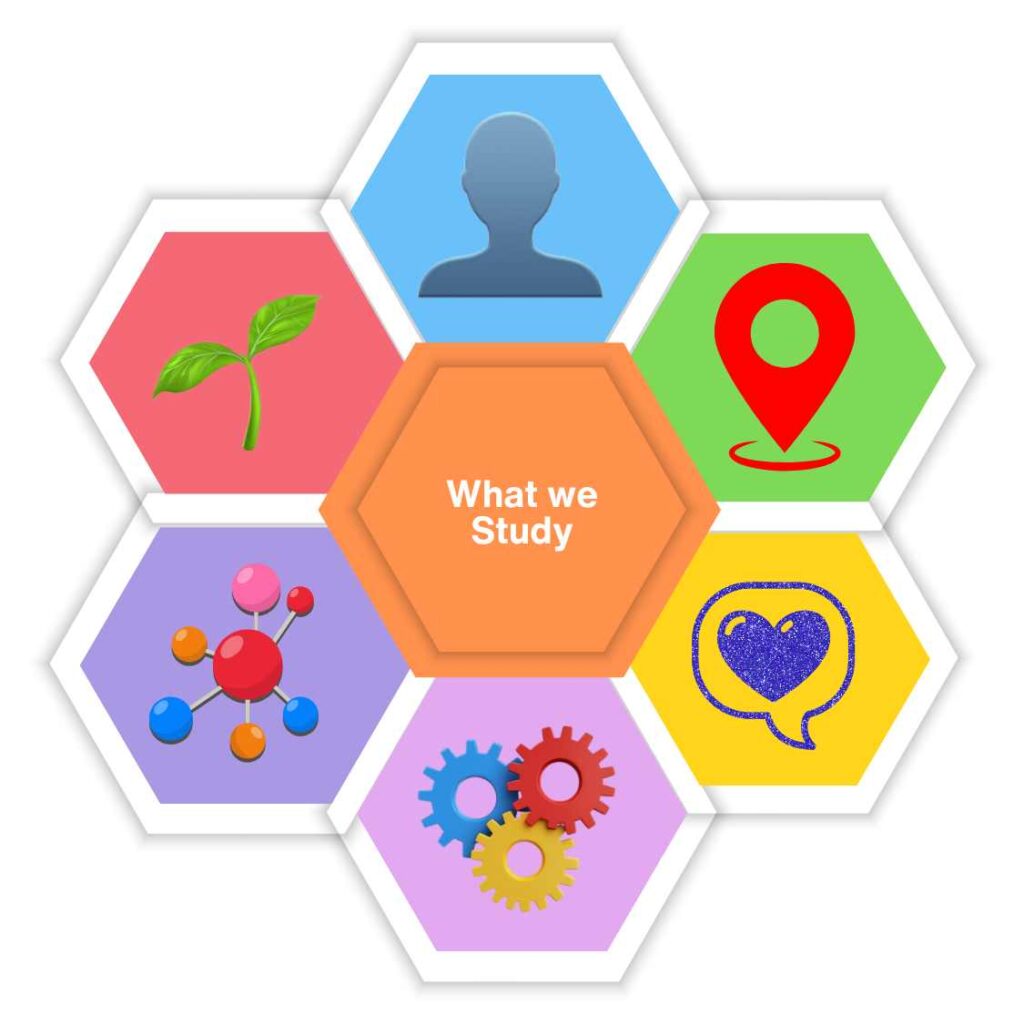
Who We Are: An inquiry into identity as individuals and as part of a collective through: physical, emotional, and spiritual health and well-being; relationships and belonging; learning and growing.
Who We Where We Are in Place and Time: An inquiry into the histories and orientation in place, space, and time through periods, events, and artifacts; communities, heritage, culture, and environment; natural and human drivers of movement, adaptation, and transformation.
How We Express Ourselves: An inquiry into identity as individuals and as part of a collective through: physical, emotional, and spiritual health and well-being; relationships and belonging; learning and growing.
How the World Works: An inquiry into the understandings of the world and phenomena through: patterns, cycles, systems; diverse practices, methods, and tools; discovery, design, innovation, possibilities, and impacts.
How we organize ourselves: An inquiry into systems, structures, and networks through interactions with and between social and ecological systems; approaches to livelihoods and trade practices: intended and unintended consequences; representation, collaboration, and decision-making.
Sharing the Planet: An inquiry into the interdependence of human and natural worlds through: rights, responsibilities, and dignity of all; pathways to just, peaceful, and reimagined futures; nature, complexity, coexistence, and wisdom.
PYP Subjects
The International Baccalaureate Primary Years Programme (PYP) encourages students to connect their learning to the world around them. Explore the eight subject groups that nurture knowledge, develop essential skills, inspire creativity, and build real-world understanding.
📖 Language
Language empowers students to communicate confidently through reading, writing, speaking, and listening. Students explore different texts, express their ideas, understand diverse perspectives, and develop creativity and critical thinking, preparing them to become effective communicators and lifelong learners.
➗ Mathematics
Mathematics challenges students to explore numbers, recognize patterns, and apply mathematical concepts to real-world situations. Through inquiry, investigation, and problem-solving, students develop logical reasoning, analytical thinking, and the confidence to make informed decisions in everyday life.
🔬 Science
Science encourages students to explore the natural world through observation, experimentation, and inquiry. Students investigate scientific concepts, develop evidence-based thinking, and discover how scientific knowledge can address real-world challenges and promote a more sustainable future.
🌏 Social Studies
Social Studies invites students to investigate people, places, cultures, and societies through history, geography, and other social sciences. Students develop an understanding of global connections, appreciate diversity, and learn to become responsible, open-minded citizens who take meaningful action in their communities.
🎨 Arts
The Arts encourage students to communicate their thoughts, emotions, and perspectives through visual arts, music, drama, and movement. Students experiment with different techniques, explore cultural expressions, and develop creativity, confidence, and artistic skills while discovering how the arts can inspire change and connect people.
🏃 Personal, Social, and Physical Education (PSPE)
PSPE empowers students to develop physical competence, emotional awareness, and positive relationships through movement, teamwork, and reflection. Students learn to make healthy choices, manage challenges, respect others, and build lifelong habits that support their physical, mental, and social well-being.
Conceptual Understanding:
How We Think
At the core of the curriculum are seven key concepts. These “lenses” shift the focus from rote memorization to deeper, transferable understanding:
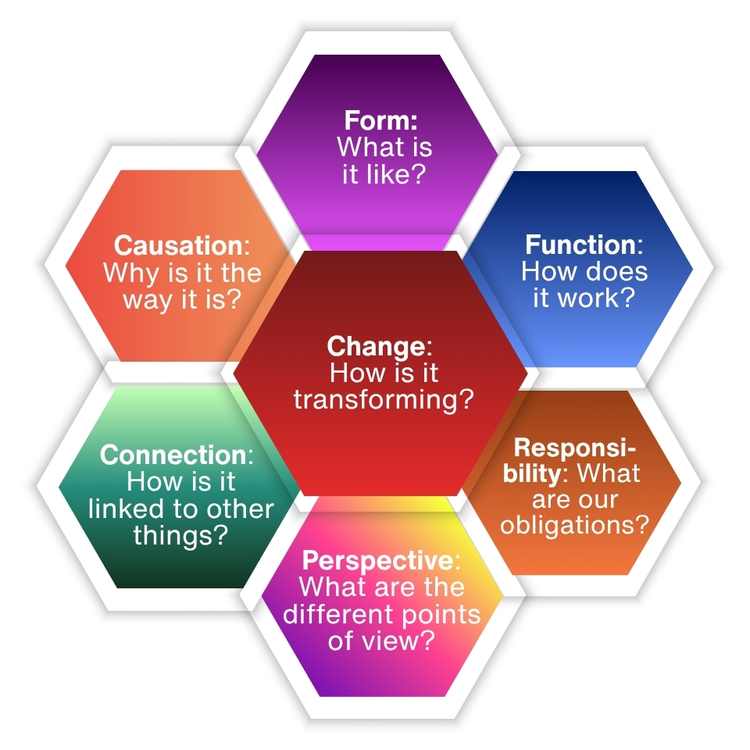
Change: How is it transforming?
Students explore how things evolve, grow, and develop over time. Understanding change helps learners recognize patterns, adaptations, and transformations in the world around them.
Form: What is it like?
Students investigate the characteristics, structure, and features of objects, systems, and ideas. This concept encourages careful observation and description.
Function: How does it work?
Learners examine the purpose and operation of systems, objects, and processes. They explore how different parts work together to achieve a function.
Responsibility: What are our obligations?
Students consider their duties and responsibilities toward others, the environment, and their communities, encouraging ethical action and informed choices.
Perspective: What are the different points of view?
Learners explore how people may interpret situations differently based on their experiences, beliefs, and values, fostering empathy and open-mindedness.
Connection: How is it linked to other things?
Students identify relationships and links between ideas, people, systems, and events, helping them understand the interconnected nature of the world.
Causation: Why is it the way it is?
Learners investigate causes and consequences, examining the reasons behind events, behaviors, and conditions to develop deeper understanding.
Approaches to Learning (ATL): What we can do
Approaches to Learning (ATL) Skills
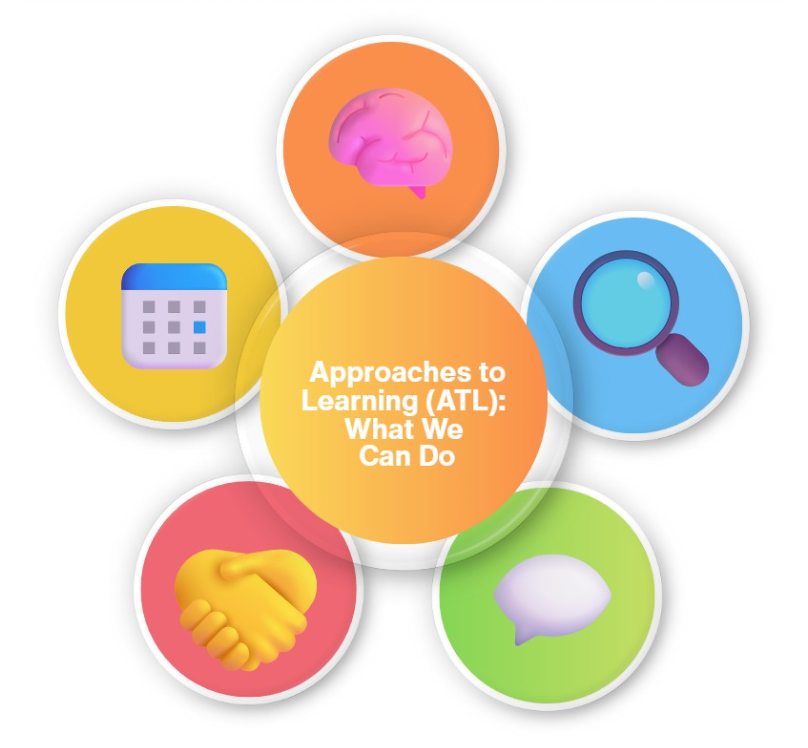
The International Baccalaureate Primary Years Programme (PYP) helps students develop essential skills for learning and life. Through the Approaches to Learning (ATL), students strengthen their communication, collaboration, self-management, research, and thinking skills to become independent, reflective, and lifelong learners.
🗣️ Communication Skills
Students learn to communicate clearly through speaking, writing, reading, listening, and digital media. They gain confidence in sharing their thoughts, expressing their feelings, and understanding the ideas of others.
Students become confident communicators who share ideas and listen with understanding.
🤝 Social Skills
Students learn to cooperate, share responsibilities, respect differences, and appreciate other people’s feelings and perspectives. Through teamwork and collaboration, they build friendships, resolve disagreements peacefully, and contribute positively to their school community.
Students become caring collaborators who respect others and work well with different people.
⏰ Self-Management Skills
Students learn to manage their time, organize their tasks, set goals, and take responsibility for their learning. They develop patience, resilience, and perseverance as they face challenges, manage their emotions, and celebrate their progress.
Students become independent and resilient learners who take responsibility for their growth.
🔎 Research Skills
Students learn to ask meaningful questions, gather information, and identify reliable sources. They explore books, digital media, and their surroundings while learning to use information safely, honestly, and responsibly.
Students become inquisitive researchers who explore ideas and use information responsibly.
🧠 Thinking Skills
Students learn to ask questions, solve problems, explore creative ideas, and make connections between what they learn and the world around them. They reflect on their experiences and discover different ways to approach challenges.
Students become curious thinkers who solve problems creatively and learn from their experiences.